
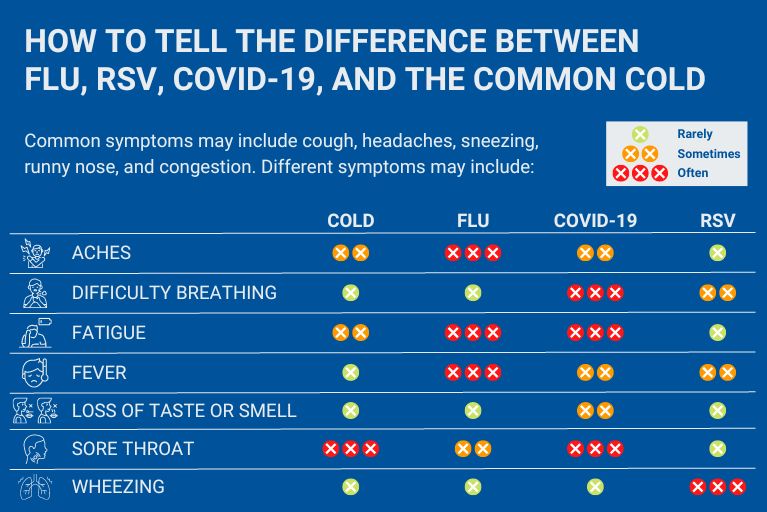
COVID-19, influenza (flu), and respiratory syncytial (sin-SISH-uhl) virus (RSV) can cause many of the same symptoms, including a fever, stuffy or runny nose, coughing, and sneezing. To help you tell the difference, the National Foundation for Infectious Diseases (NFID) developed a simple chart, available in English and Spanish.
While these viruses usually don’t cause serious illness, some people are more likely than others to get very sick or even die. It’s important to know what virus you have because there are specific treatments that may help you recover faster and avoid serious complications.
Who is Most at Risk?
The people most likely to get very sick from respiratory viruses include:
- Pregnant women
- Infants and young children
- Older adults
- People who have another health problem including:
- Asthma
- Diabetes
- Chronic heart, kidney, or lung disease
- A weakened immune system from HIV, cancer, or organ transplantation
Why Testing Matters
Because these diseases have many of the same symptoms, it’s important to get tested to figure out what is making someone sick.
Drugs are available that can make COVID-19 or flu less severe, but they work best when taken within a few days of the start of symptoms. Getting tested quickly gives the patient the best chance for treatment.
Signs of Trouble
Most symptoms can be handled at home, but people with any of these symptoms should get emergency medical help immediately:
- Trouble breathing
- Bluish skin
- Chest pain
- Confusion
- Trouble waking up or staying awake
Treatment Options
Antiviral drugs are available to treat flu and COVID-19.
COVID-19: If you are in one of the groups of people who are likely to get very sick from COVID-19, contact a healthcare professional as soon as possible if you test positive. Prescription drugs for COVID-19 work best if taken in the first 5-7 days of symptoms. If you are not at risk for serious illness, you can manage your symptoms with over-the-counter medicines.
Flu: People at risk of getting very sick may get a prescription for an antiviral drug that can prevent the worst effects of flu. For people who are not likely to get seriously ill, the drugs can take a day or two off the time they have symptoms. They work best if taken in the first 2 days of the illness.
RSV: There is no treatment for RSV, but over-the-counter medicines can manage mild symptoms. (Never give children aspirin.) People who get very sick may need to go to the hospital. RSV can be very serious for young children and older adults.
Prevention
Immunization is the best way to protect against COVID-19, flu, and RSV. Healthcare professionals recommend RSV vaccines or monoclonal antibodies for very young children, pregnant people, and older adults. They recommend updated COVID-19 vaccines and annual flu vaccines for nearly everyone in order to keep up with the changing virus.
Getting vaccinated doesn’t guarantee you won’t get sick. But vaccination lowers the odds that you will get seriously ill or die. And people who get a COVID-19 vaccine are less likely to develop Long COVID.
Talk with a trusted healthcare professional about which vaccines you may need.
Reviewed and updated April 2026
Sources: American Academy of Pediatrics, American Academy of Family Physicians, American College of Emergency Physicians, Infectious Diseases Society of America
Related Resources
Don’t Be A Dreaded Spreader
In this episode, NFID experts offer insights on updated recommendations from the Centers for Disease Control and Prevention (CDC) to help prevent the spread of respiratory viruses, including COVID-19, influenza (flu), and respiratory syncytial virus (RSV)
What Is Long COVID?
Long COVID includes a range of long-term health issues that can occur in people who have been infected with the virus that causes COVID-19
¿Eres Ese Tipo de Persona?
Animated video in Spanish on flu symptoms, prevention, and treatment, reminding viewers to get vaccinated each year and stay home when sick to help protect themselves and those around them from flu