
Although the COVID-19 pandemic has clearly demonstrated the importance of public health, the prevalence of medical misinformation online is making it harder than ever for young people to tell the difference between fact and fiction when it comes to protecting their own health. To help equip them with reliable information, the National Foundation for Infectious Diseases (NFID) and DoSomething.org have collaborated on a campaign, Complete What’s Missing, which aims to educate young people about meningococcal disease and the importance of prevention through vaccination. Special thanks to DeNora Getachew, chief executive officer of DoSomething.org, for the guest blog post on the importance of being fully informed about ways to spot medical misinformation.
It’s not just you … even celebrities can get caught up in spreading health misinformation—here is the truth.
Rapper Nicki Minaj took to Twitter in September to share a story she’d heard from her “cousin in Trinidad” about a purported side effect of the COVID-19 vaccine.
My cousin in Trinidad won’t get the vaccine cuz his friend got it & became impotent. His testicles became swollen. His friend was weeks away from getting married, now the girl called off the wedding. So just pray on it & make sure you’re comfortable with ur decision, not bullied
— Nicki Minaj (@NICKIMINAJ) September 13, 2021
What resulted was “#ballgate”—an intense, albeit brief, cultural and media moment which at once prompted some of the rapper’s fans to join anti-vaccine protests and US and Trinidian health authorities to investigate and scramble to counter this latest strain of COVID-19 misinformation.
Unfortunately, this falsehood is not the only popular medical myth circulating. If the COVID-19 pandemic has taught us anything, it’s that we all share a responsibility to keep our communities healthy and a huge part of that is not spreading falsehoods about health threats. Whether it’s about COVID-19 or any other disease, medical misinformation can keep us, especially young people, from taking the steps necessary to stay healthy. Here are five popular medical myths to watch out for and the medical truths you should know.
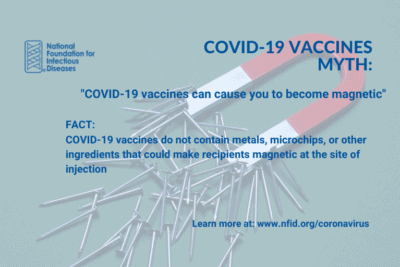
Myth: COVID-19 vaccines can make you magnetic
Fact: None of the COVID-19 vaccines currently approved in the US contain metal of any kind and none will make you magnetic
They do however contain common household ingredients like salt, sugar, vinegar, various fats, and alcohol.
Myth: Flu is nothing more than a bad cold, so you don’t need to be vaccinated against it
Fact: Colds don’t kill people but the flu does—on average, tens of thousands of people die from flu every year in the US. So you should get a flu vaccine every year!
Getting an annual flu vaccine not only protects the individual getting the vaccine, but their whole community. Like COVID-19, older and immunocompromised people are particularly susceptible to flu-related complications, and getting vaccinated can help protect them (and you)! View more myths about flu ...
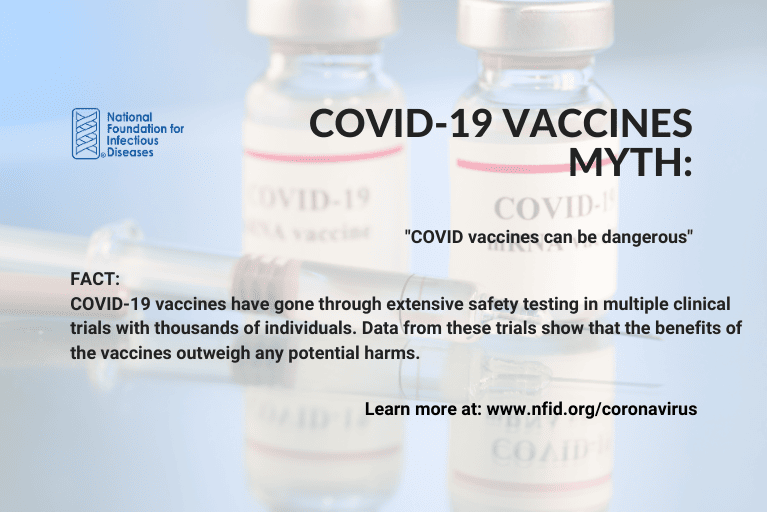
Myth: COVID-19 vaccines are untested and can negatively impact your health
Fact: COVID-19 vaccines have gone through extensive safety testing in multiple clinical trials
Data from the vaccine clinical trials that occurred before the FDA emergency use authorization, and the nearly 400 million doses of these vaccines administered in the US since December 2020, show that the benefits of the vaccines outweigh any potential harms. COVID-19 kills 1 in 100 people who contract it and leaves 1 in 3 with long-term health conditions like difficulty focusing, low energy, and trouble breathing. On the contrary, vaccines prevent between 71% and 93% of cases, and side effects—other than fever, aches, and pain at the vaccination site, which generally go away within a few days—are extremely rare. View more common COVID-19 myths …
Myth: Only girls need to get vaccinated against HPV vaccine
Fact: Everyone, regardless of biological sex, can carry and spread human papillomavirus (HPV) if not vaccinated
HPV (or human papillomavirus) is a highly contagious sexually transmitted infection that causes cervical cancer in as many as 500,000 women each year worldwide. People of all gender identities are individually susceptible to contracting HPV and potentially spreading it to others. When all of us get vaccinated, we can help to stop the spread.
Myth: I am healthy so I don’t need to worry about meningitis or meningococcal disease
Fact: While rare, meningococcal disease is highly contagious and often deadly, even for otherwise healthy adolescents and young adults
Meningococcal disease is caused by a bacteria which can cause meningitis (a brain and spinal cord infection with serious health complications), bloodstream infection, and death. Young people and college students living in dorms are at an increased risk of contracting it. Especially concerning is that meningococcal disease is often misdiagnosed as something less serious because the symptoms are similar to other viral illnesses. The disease, which spreads through droplets in the air, can kill or permanently harm otherwise healthy individuals in as little as 24-48 hours.
While meningococcal disease is preventable with vaccination, fewer than half of young people are fully vaccinated against meningococcal disease—many because they have only completed part of the recommended vaccination series.
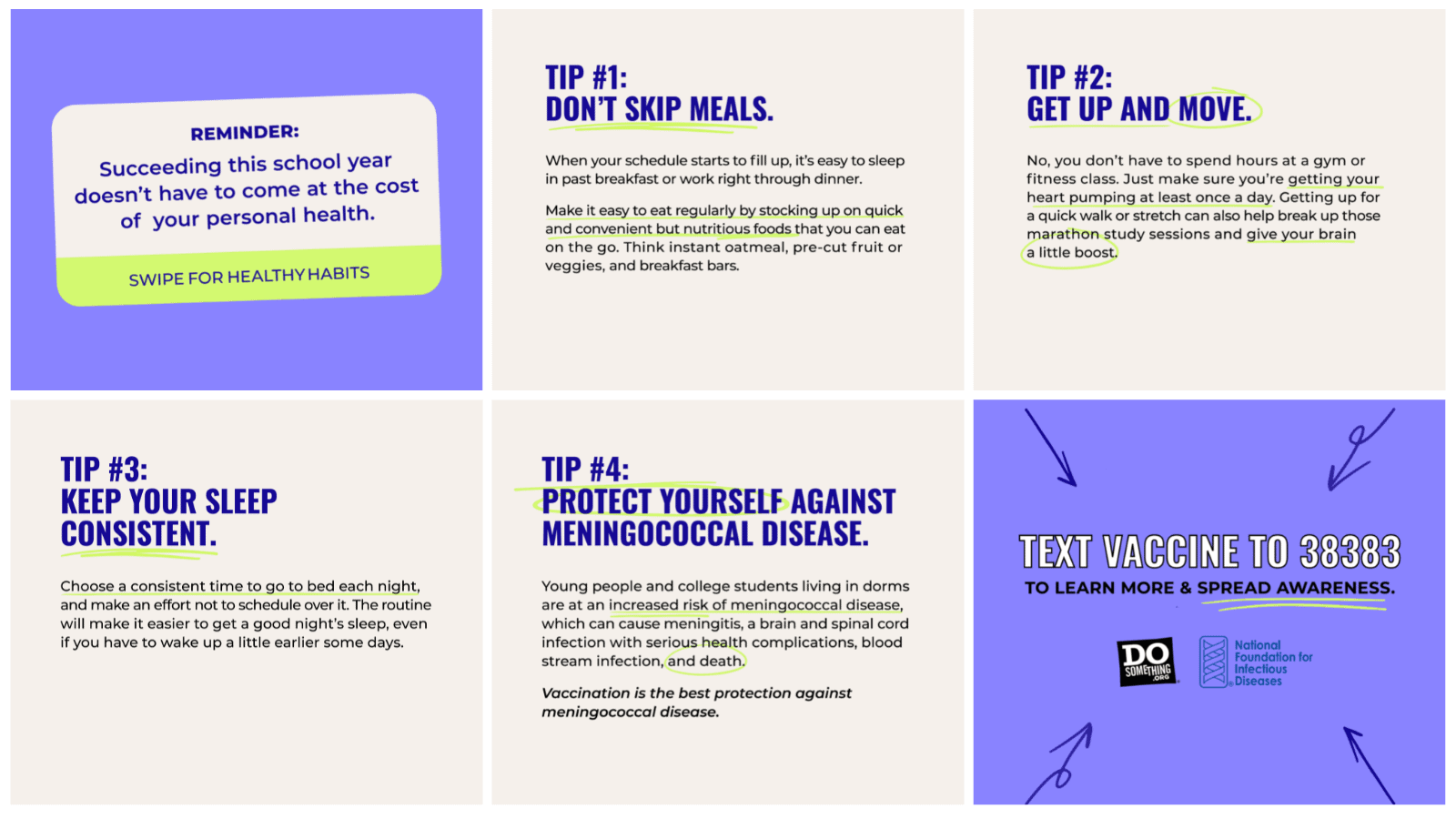
Keeping up to date with recommended vaccines is the best way to protect yourself against serious infectious diseases. Talk to a healthcare professional to make sure that you and your family are protected, and learn more about vaccine facts and fiction from NFID.
To join the conversation, follow NFID (@NFIDvaccines) and DoSomething (@dosomething) on Twitter using the hashtag #VaxxedForClass, like NFID and DoSomething on Facebook, follow NFID and DoSomething on Instagram, visit NFID on LinkedIn, and subscribe to receive future NFID Updates.