
Respiratory Vaccination Attitudes, Knowledge, Access, and Reported Attempts
Respiratory illnesses—including influenza (flu), COVID-19, respiratory syncytial virus (RSV), and pneumococcal disease—remain important causes of illness and serious health outcomes in the United States. Vaccination and other immunization strategies can reduce these risks, but uptake of respiratory vaccines remains suboptimal and may be influenced by factors including uncertainty about personal recommendations, limited understanding of disease burden, and challenges accessing vaccination.
To better understand these factors, the National Foundation for Infectious Diseases (NFID) commissioned a nationally representative survey of US adults conducted by NORC at the University of Chicago. The findings point to a gap between broad support for vaccination and adults’ understanding of which vaccines may be appropriate for them—and, ultimately, whether they seek vaccination. They also highlight the central role of healthcare professionals and vaccination settings in providing clear guidance and supporting access. Together, the findings suggest that communications may be most useful when they provide specific, actionable information, help individuals understand their personal recommendations and disease risks, and are available where people seek vaccination.
Key Findings
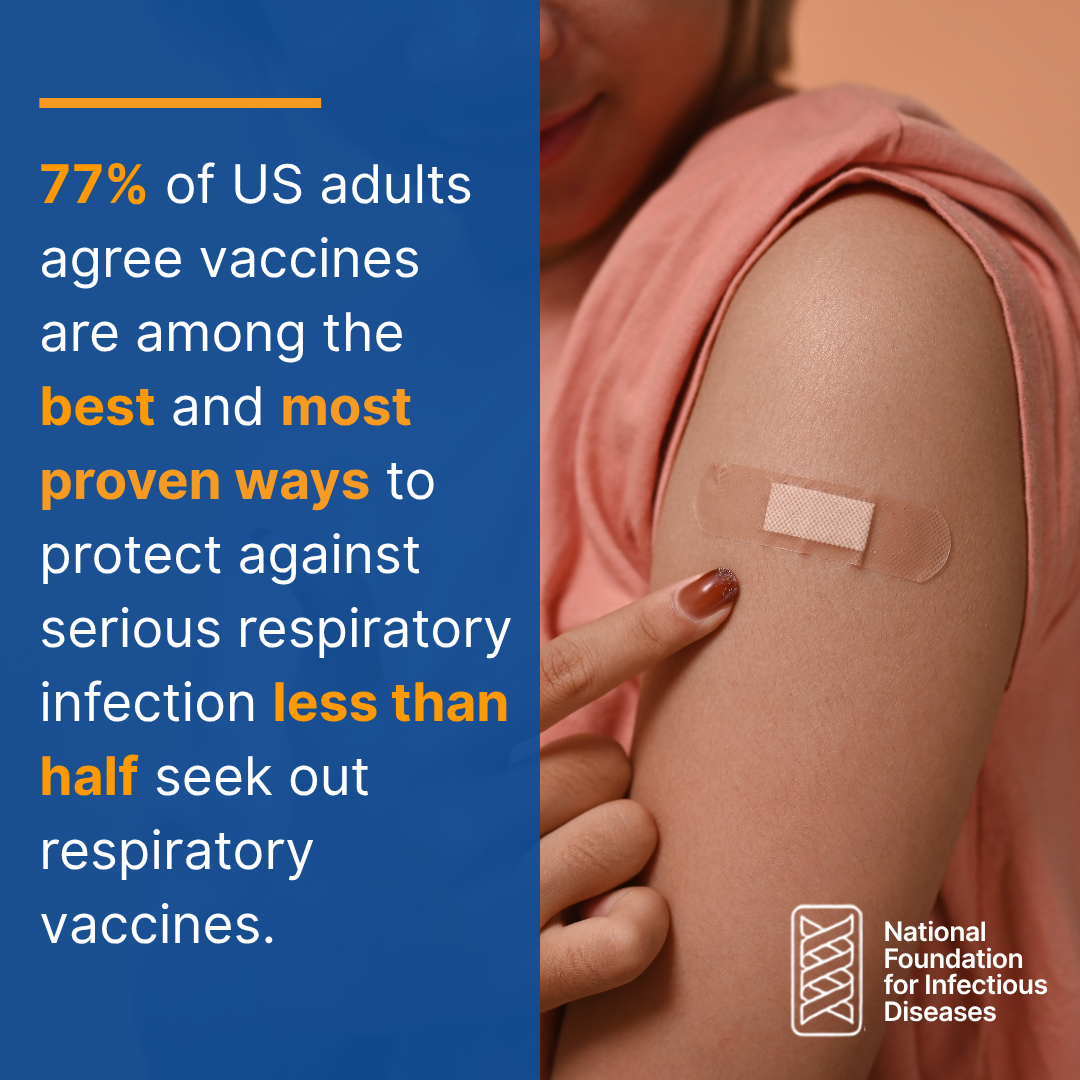
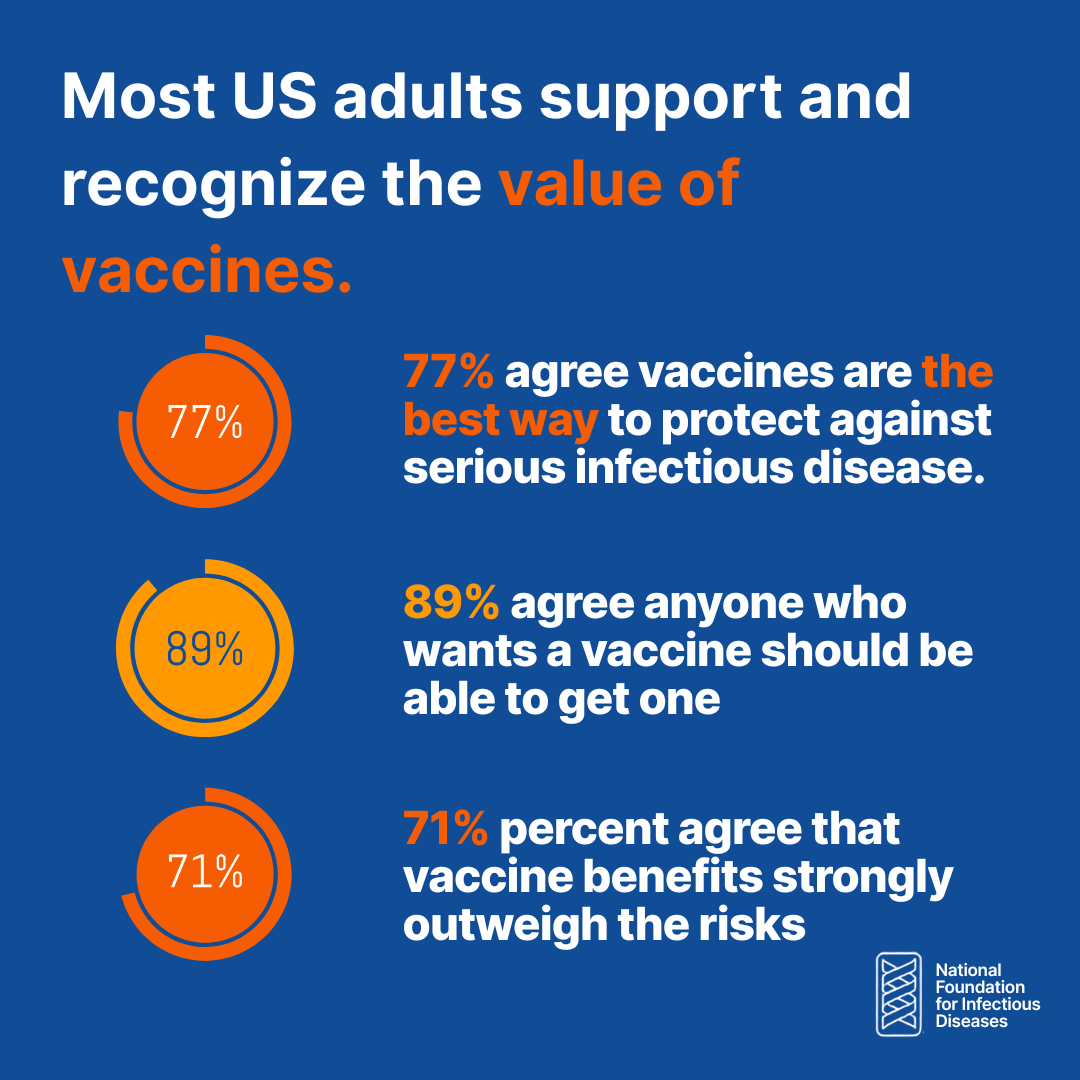
1. Most US adults support vaccination and believe vaccines should be accessible. Seventy-seven percent of US adults surveyed agreed that vaccines are among the best and most proven ways to protect against serious infectious disease, 71% agree that vaccine benefits strongly outweigh risks, and 89% agree that anyone who wants access to a vaccine should be able to obtain one.
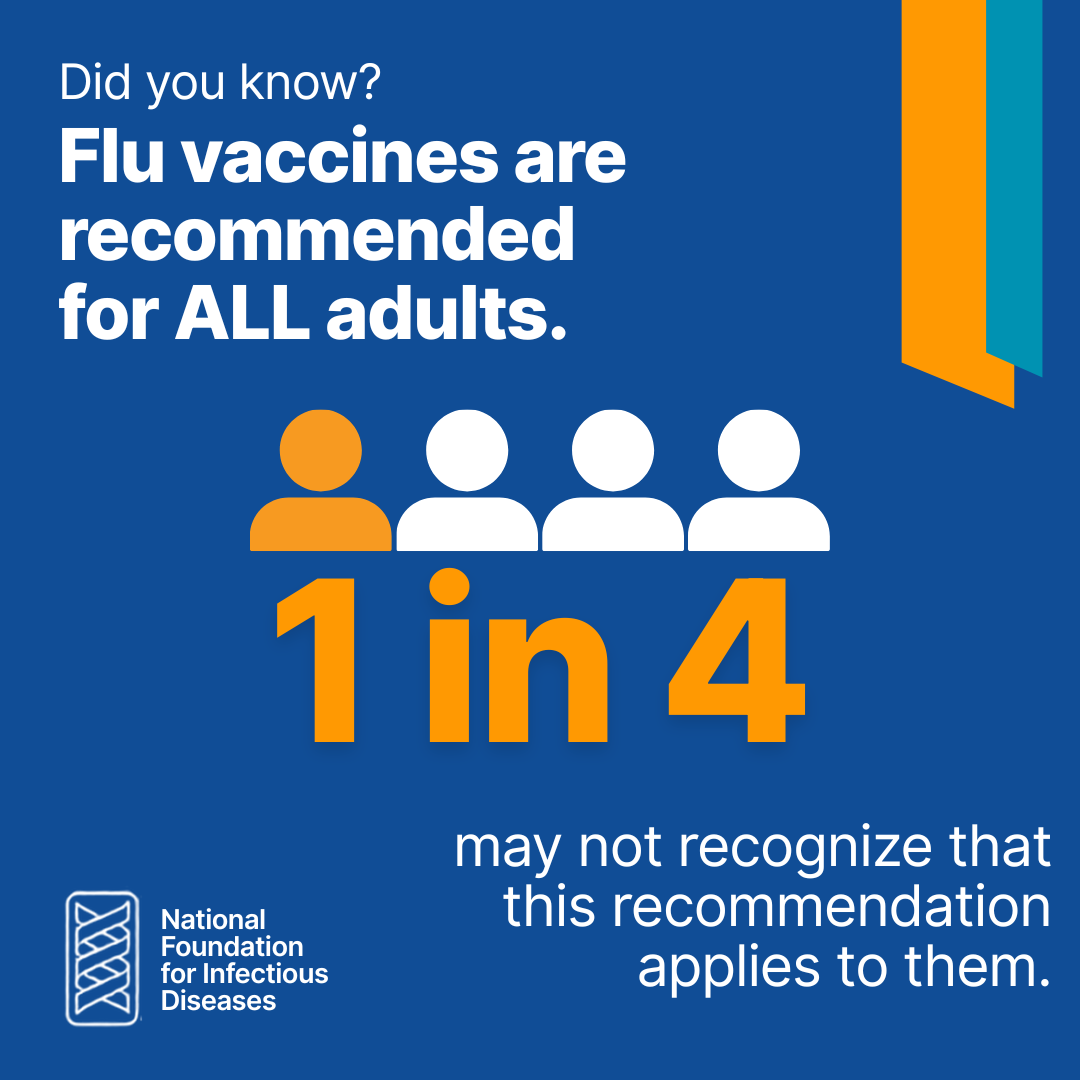
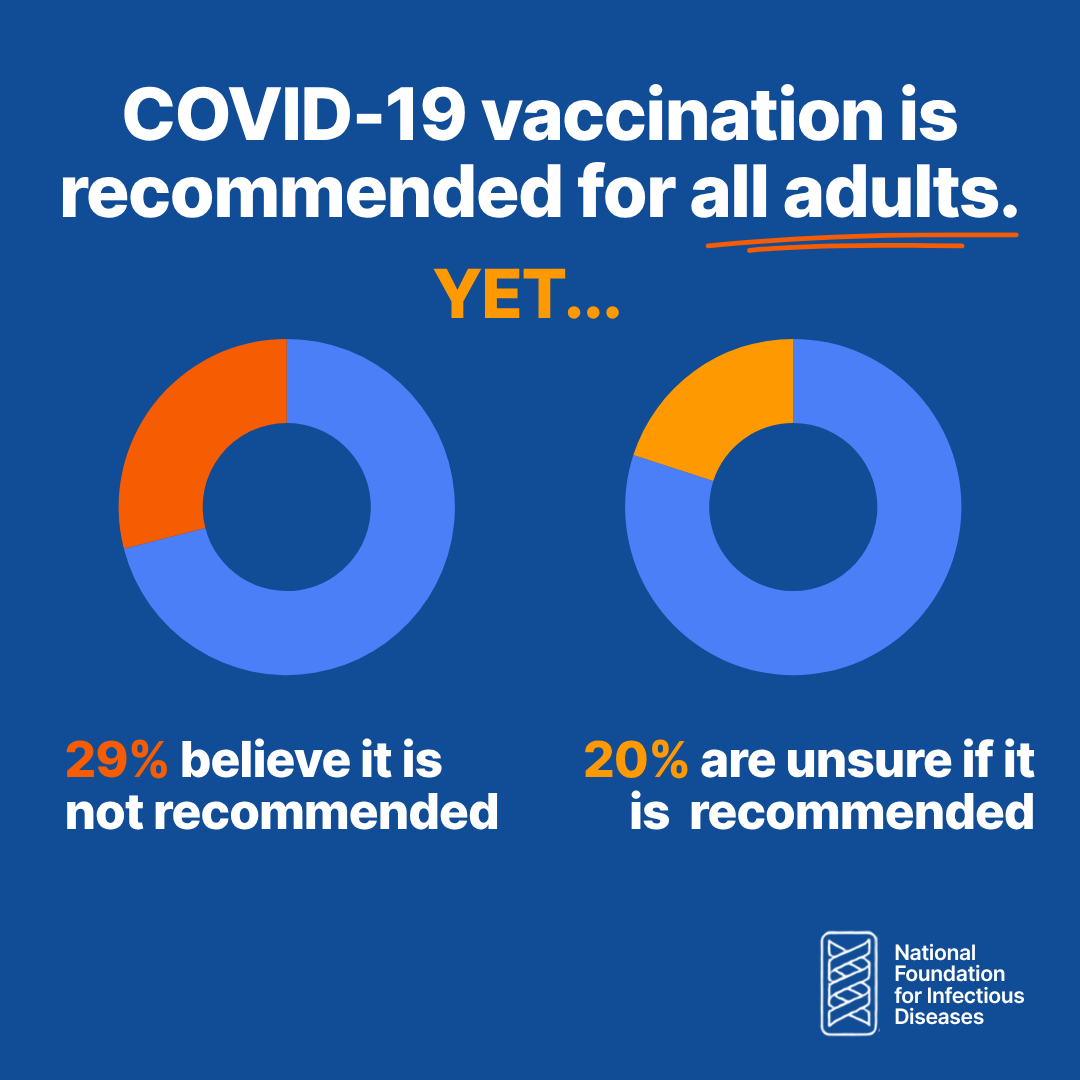
Many adults remain uncertain about whether specific respiratory vaccines are recommended for them. Although leading medical societies broadly recommend flu vaccination and updated COVID-19 vaccination for adults, 28% of US adults either said flu vaccination is not recommended for someone like them (17%) or said they did not know whether it is recommended (11%).[i] The gap was larger for COVID-19 vaccination: 49% either said it is not recommended for someone like them (29%) or did not know whether it is recommended (20%).
Perceived uncertainty was also substantial for RSV and pneumococcal vaccination. However, because recommendations for those vaccines depend on individual factors, it is difficult to ascertain the gap in knowledge of recommendations.
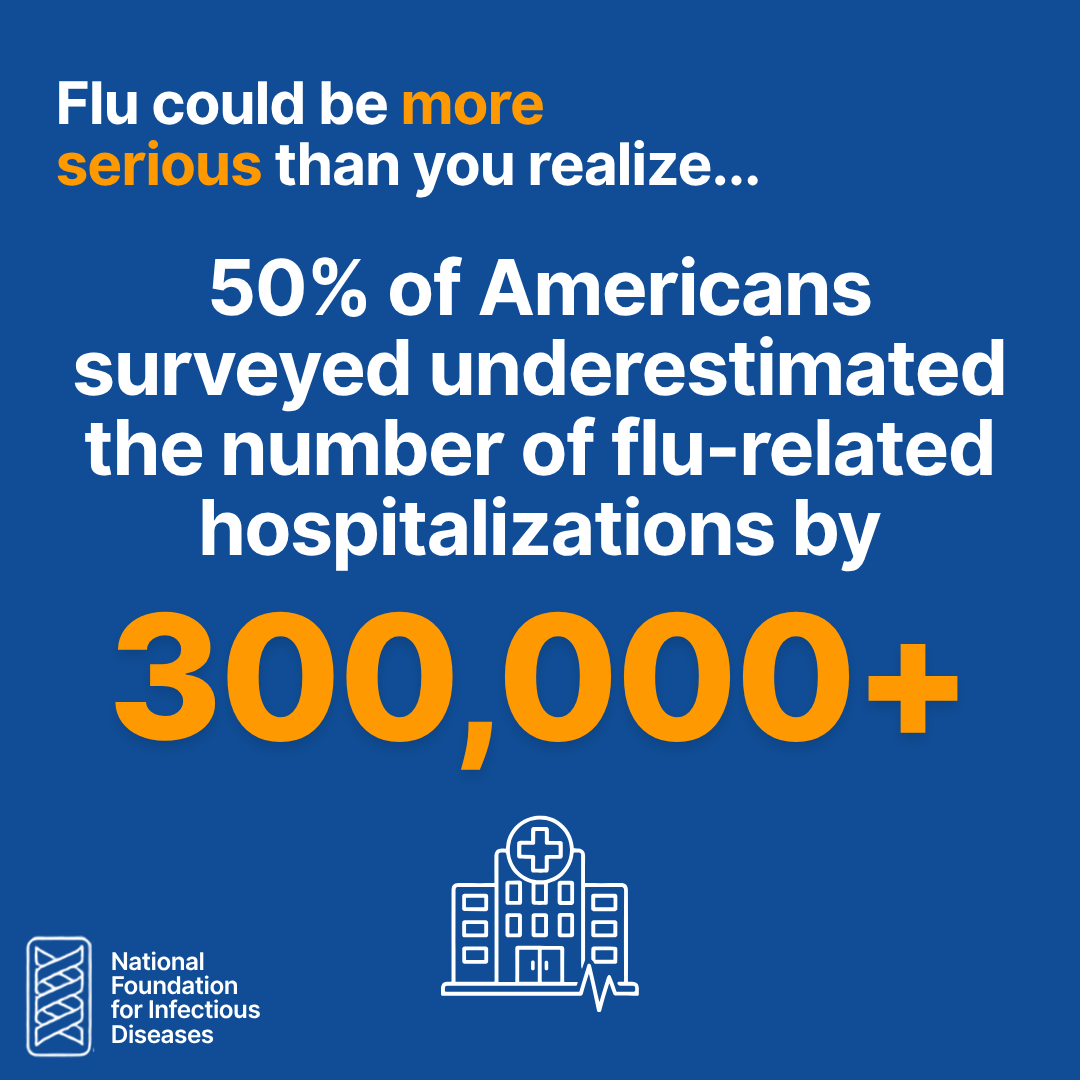
2. Public knowledge of respiratory disease burden is mixed. Only 11% of survey respondents correctly selected the response range containing the Centers for Disease Control and Prevention (CDC) estimate of approximately 710,000 flu hospitalizations during the 2024–2025 season, while half estimated fewer than 400,000. Separately, only 47% of survey respondents correctly selected RSV from the multiple-choice list, as the leading cause of hospitalization among US infants.[ii]
3. Healthcare professionals are the strongest and most trusted communication channel. When asked where they go first for accurate information about flu, COVID-19, respiratory syncytial virus (RSV), or pneumococcal vaccines, 55% named a healthcare professional—doctor, nurse, or pharmacist. By comparison, 46% report a great deal or a lot of trust in CDC, and 46% say the same of state or local health departments.
4. Less than half of adults reported an attempt to obtain at least one of four respiratory vaccines in the prior 12 months. Forty-eight percent of respondents reported trying to obtain at least one of four respiratory vaccines—flu, COVID-19, RSV, or pneumococcal vaccine—during the prior 12 months.[1] Reported attempts were most common for flu vaccine (44%), followed by COVID-19 vaccine (23%), pneumococcal vaccine (10%), and RSV vaccine (9%).
5. Pharmacies and clinicians’ offices are the dominant access points. Pharmacy was the first location reported by 51% of adults who tried to obtain flu vaccine, 60% who tried to obtain COVID-19 vaccine, 47% who tried to obtain RSV vaccine, and 50% who tried to obtain pneumococcal vaccine. Regular doctors’ offices or clinics were the second-most-common individual first location, reported by 36%, 26%, 38%, and 43% of attempters, respectively.
6. About one in five respondents who tried to obtain a respiratory vaccine reported at least one problem. Among adults who reported trying to obtain at least one of the four vaccines, 22% reported at least one problem. Reported problems were less common among flu-vaccine attempters (15%) than among those who tried to obtain COVID-19 vaccine (21%), RSV vaccine (23%), or pneumococcal vaccine (27%).[2] Types of problems reported include: being told the vaccine was out of stock or unavailable, being told to return another day or time, and being sent back and forth between a pharmacy and doctor’s office.
Implications for Communications and Access
- Americans broadly support vaccines–but that doesn’t necessarily translate into vaccination. The combination of favorable attitudes, uncertainty about personal recommendations, and limited vaccination attempts suggests that general support alone may be insufficient to help people determine which vaccines are appropriate for them and take the next step.
- Communications that provide actionable and specific guidance and underscore disease burden may support more informed vaccine decision-making. Helping people understand which vaccines may be appropriate for them—as well as the potential risks associated with respiratory diseases—may make it easier to assess their individual vaccination needs.
- Ensuring healthcare professionals are equipped with resources to communicate clear, consistent guidance may help translate trust into informed vaccine decision-making. Resources that support doctors, pharmacists, and nurses in explaining recommendations and addressing individual questions may be particularly valuable.
- Communications resources and decision-support tools may have the greatest practical value when they are available where people seek vaccination. With pharmacies and clinicians’ offices serving as the primary access points—and healthcare professionals as the most trusted messengers—these settings may offer an important opportunity to provide information, clarify eligibility, and facilitate vaccination in the same interaction.
- Even relatively limited access challenges may have implications for future vaccination behavior. The problems reported by some adults—including those seeking RSV and pneumococcal vaccines—suggest value in examining where uncertainty, availability, scheduling, cost or coverage, and other barriers may interrupt the vaccination process.
Notes
[1] In this survey, ‘trying to obtain’ included making an appointment, going to a pharmacy or clinician’s office, or asking a clinician or pharmacist about vaccination.
[2] Estimates for adults who tried to obtain RSV vaccine (unweighted n=119) or pneumococcal vaccine (unweighted n= 131) are based on relatively small samples and are subject to greater statistical uncertainty.
References
[i] American Medical Association. Respiratory Virus Immunization Recommendations. Published 2026. Accessed September 15, 2026. https://www.ama-assn.org/system/files/respiratory-virus-immunization-recommendations.pdf(opens in new tab)
[ii]McLaughlin JM, et al. Respiratory syncytial virus-associated hospitalizations among children younger than 5 years: 2016 to 2020. Pediatrics. 2024;153(3):e2023062574. doi:10.1542/peds.2023-062574 https://publications.aap.org/pediatrics/article/153/3/e2023062574/196566/Respiratory-Syncytial-Virus-Associated(opens in new tab)
About the Survey
Methodology and Limitations
The NFID survey was conducted by NORC at the University of Chicago using AmeriSpeak Omnibus, a probability-based panel designed to represent the US household population. Interviews were conducted August 13–17, 2026, among 1,206 adults age 18 and older residing in all 50 states and the District of Columbia. Interviews were conducted in English; 1,132 were completed online and 74 by telephone.
NORC weighted the data using poststratification variables that included age, gender, census division, race and ethnicity, and education benchmarks from the 2026 Current Population Survey. NORC reports an overall margin of sampling error of ±3.6 percentage points at the 95% confidence level, including the design effect. Margins of sampling error are larger for subgroups.
Sampling error is only one potential source of survey error. Results may also be affected by self-report, recall, question wording and order, response interpretation, nonresponse, and coverage limitations. The survey did not verify clinical eligibility, vaccination history, vaccine receipt, diagnoses, or reported access problems.
Quality assurance checks were conducted to ensure data quality. In total, 54 interviews were removed for nonresponse to at least 50% of the questions asked of them, for completing the survey in less than one-third the median interview time for the full sample, or for straight-lining all grid questions asked of them. These interviews were excluded from the data file prior to weighting.
About the National Foundation for Infectious Diseases
Founded in 1973, the National Foundation for Infectious Diseases (NFID) is a non-profit 501(c)(3) organization dedicated to educating and engaging the public, communities, and healthcare professionals about infectious diseases across the lifespan. For more information, visit www.nfid.org.
Shareable Graphics
Related Resources
2025 National Survey on Respiratory Diseases
The 2025 national survey examines attitudes and behaviors regarding flu, RSV, COVID-19, and pneumococcal disease.
From Wild to Mild: The Power of Flu Vaccination
Shareable graphics to raise awareness about the importance of getting an annual flu vaccine to help protect against serious flu-related illness
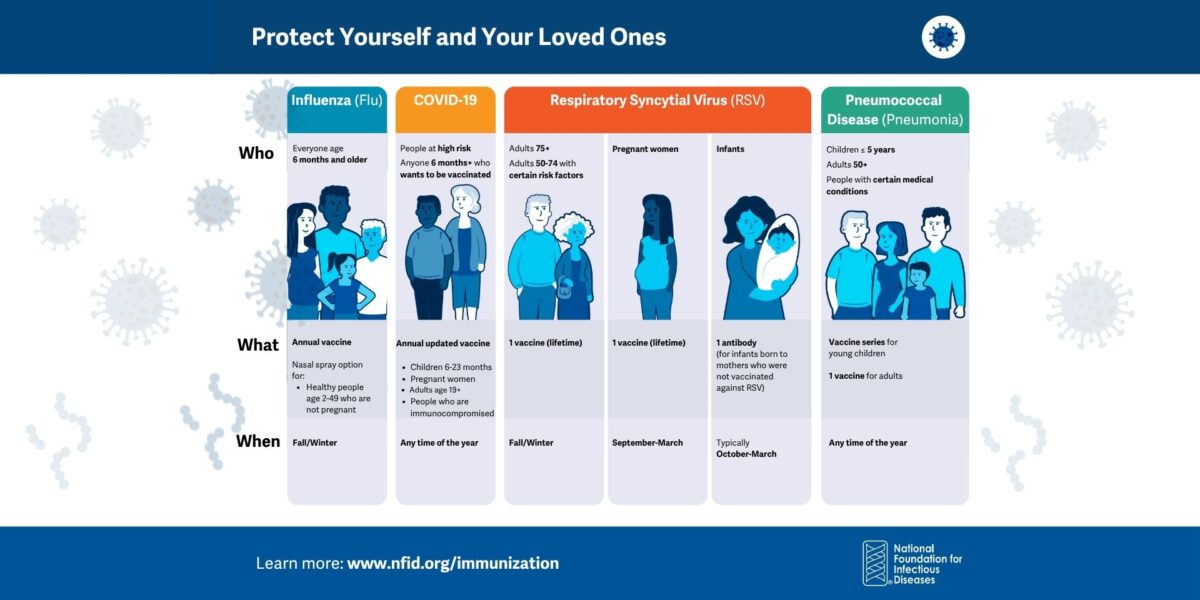
Respiratory Immunization Graphics
Graphics and sample social posts to help raise awareness about preventing COVID-19, flu, RSV, and pneumococcal disease