
Special thanks to Families Fighting Flu for this guest blog post on the economic impact of influenza (flu) on parents, kids, and work–and the nation’s economy.
 When a child comes home sick with flu, most families focus on recovery. What often goes unspoken is the financial, emotional, and logistical toll that a single sick week can place on an entire household.
Flu does not just affect health. It disrupts daily life in ways that can linger long after symptoms fade. And nationally, those disruptions add up to a staggering economic impact.
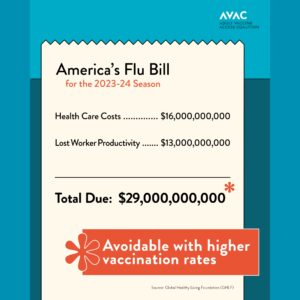
According to a groundbreaking new study done by the Global Healthy Living Foundation and Adult Vaccine Access Coalition, the 2023–2024 flu season cost the United States nearly $29 billion in medical expenses and lost productivity.
When you break those numbers down to the household level, the reality becomes deeply personal.
Missed School, Missed Learning
For children, flu often means several days, or more, out of school. Beyond falling behind academically, kids may miss key lessons, exams, sports, and important social interactions that support emotional well-being.
Even a short absence can create stress for students trying to catch up. For families, missed school often means rearranged schedules and additional caregiving responsibilities.
The Pressure on Working Parents
When a child is sick with flu, parents often face difficult decisions. Do you stay home from work? Attempt to work remotely while caregiving? Use limited sick leave?
Lost productivity is one of the largest contributors to flu’s economic burden. Around $13 billion in lost productivity each season are due to missed work and reduced earnings because of flu.
For families, that impact can look like:
- Lost wages
- Reduced work hours
- Missed deadlines
- Job-related stress
- Unpaid leave
For hourly workers or those without paid time off, even a few missed shifts can create immediate financial strain.
The Emotional Toll No One Talks About
Watching a child struggle with high fever, chills, body aches, and exhaustion can be frightening. Parents often experience anxiety about worsening symptoms, guilt about divided attention, and physical exhaustion from sleepless nights.
For families with medically vulnerable members in the home, the fear of complications can feel overwhelming.
These emotional costs may not appear in economic analyses, but they are deeply felt in households across the country.
When Flu Becomes More Than “Just the Flu”
While many recover at home, flu can lead to serious complications, including hospitalization. The Adult Vaccines Access Coalition analysis also notes that higher adult vaccination rates could have prevented tens of thousands of deaths during recent flu seasons. Severe cases bring additional consequences:
- Emergency room visits
- Hospital stays
- Follow-up medical care
- Ongoing bills
Even one hospitalization can have lasting emotional and financial effects on a family.
Prevention Is an Investment in Your Family
When flu costs the nation nearly $29 billion in a single season, that figure represents millions of households navigating missed work, medical expenses, and stress.
Prevention is not just about avoiding symptoms. It is about protecting your time, income, and peace of mind.
Annual flu vaccination and early treatment can reduce severity and complications. Increasing adult and pediatric vaccination rates helps reduce the overall health and economic toll of influenza nationwide.
The cost of prevention is small compared to the ripple effects of even one sick week.
To learn more about families impacted by flu, visit Families Fighting Flu. To join the conversation and get the latest news on infectious diseases:
- Like and follow NFID on social media
- Listen and subscribe to the Infectious IDeas podcast
- Subscribe to receive future NFID Updates